Preparing for Your VA Appointment: 10 Tips Every Veteran Should Know

Whether you're seeing your primary care provider at the VA, visiting a specialist, or receiving care through VA Community Care, preparing ahead of time can help you make the most of your appointment.
As a Registered Nurse, I've seen how quickly healthcare appointments can go by. Even when providers want to spend more time with each patient, appointments are often limited. That's why taking just a few minutes to prepare beforehand can help ensure your most important questions and concerns are addressed.
If you're a veteran—or you're helping a veteran prepare for an appointment—these simple tips can help you feel more organized, confident, and informed.

1. Write Down Your Top Three Questions
It's common to think of important questions throughout the week, only to forget them once you're sitting in the exam room.
Keep a running list of questions as they come to mind. Before your appointment, review your list and identify the three most important topics you'd like to discuss first.
If time becomes limited, you'll know you've addressed your highest priorities.
2. Bring an Updated Medication List
Many veterans receive care from multiple providers, and medications may change over time.
Bring an updated list that includes:
Prescription medications
Over-the-counter medications
Vitamins
Supplements
Any recent medication changes
Having an accurate medication list helps your healthcare team make informed decisions and reduce the risk of medication errors.
3. Track Your Symptoms Before the Appointment
Instead of trying to remember everything during your visit, keep notes as symptoms occur.
Consider writing down:
When the symptom started
How often it happens
What makes it better or worse
How it affects your daily life
These details can provide valuable information that may help your healthcare provider better understand what's been happening between appointments.
4. Bring Important Records if You're Seeing a New Provider
If you're receiving care through VA Community Care or seeing a specialist outside the VA system, ask whether you should bring copies of recent imaging, lab work, or medical records.
Having important information readily available may help avoid unnecessary delays or duplicate testing.
5. Know What You Hope to Accomplish
Before your appointment, ask yourself:
"What would make this appointment successful?"
Maybe you want to:
Better understand a diagnosis
Discuss ongoing symptoms
Request a referral
Review medications
Understand test results
Create a treatment plan
Having a clear goal helps guide the conversation and ensures your biggest concerns are addressed.

6. Take Notes During the Visit
Healthcare appointments often include a lot of information.
Writing down important details can make it easier to remember:
Medication changes
Follow-up appointments
Testing recommendations
Activity restrictions
Questions to ask at future visits
Many patients find it helpful to review their notes after returning home.
7. Don't Be Afraid to Ask Questions
If something doesn't make sense, it's okay to ask for clarification.
Your healthcare team wants you to understand your care plan.
Simple questions like:
"Could you explain that another way?"
"Can you tell me what that means?"
"What should I expect next?"
can help you leave feeling more confident about your healthcare.
8. Ask About Next Steps Before You Leave
Before your appointment ends, make sure you understand:
Do you need any additional testing?
Should you schedule another appointment?
Are there medication changes?
Will someone contact you with results?
Are there symptoms you should watch for?
Knowing what comes next can reduce uncertainty once you're back home.
9. Consider Bringing a Trusted Family Member or Friend
For more complex appointments, having another person present can be incredibly helpful.
A trusted family member or friend may:
Help take notes
Remember important information
Ask additional questions
Provide support during the visit
Two sets of ears are often better than one.
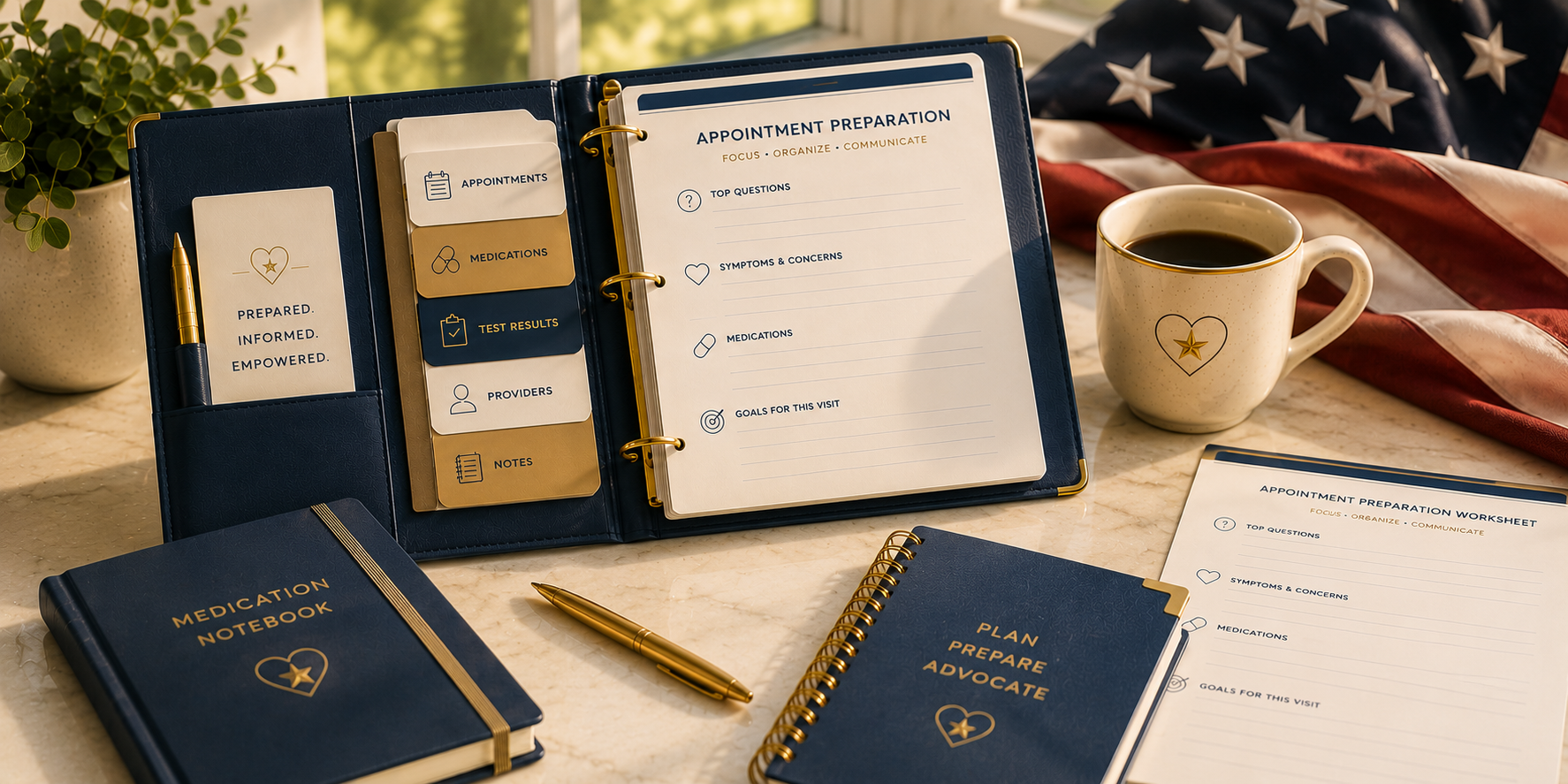
10. Use an Appointment Preparation Worksheet
One of the simplest ways to feel more organized is to prepare everything in one place before your appointment.
Our free Veteran Appointment Preparation Worksheet includes space to organize:
Questions for your healthcare provider
Symptoms and concerns
Medications
Appointment goals
VA and Community Care provider information
Follow-up recommendations
A few minutes of preparation beforehand can help you make the most of your time with your healthcare team.
Every Veteran Deserves to Feel Heard
Preparing for an appointment isn't about having all the answers before you walk through the door.
It's about making sure your concerns are heard, your questions are answered, and you leave with a clear understanding of your healthcare plan.
Whether you're managing a chronic condition, preparing for a specialist visit, or simply trying to stay organized, taking a little time to prepare can make a meaningful difference.

Download the Free Veteran Appointment Preparation Worksheet
Help make your next VA or Community Care appointment more organized and productive with our free printable guides.
Download the Veteran Appointment Preparation Worksheet Here
Have a trusted friend or family member attending the appointment with you?
Download the Caregiver Companion Worksheet Here
Need Personalized Guidance?
This article provides general education.
If you'd like personalized support preparing for a healthcare appointment, organizing medical information, or navigating complex healthcare decisions, Apex Concierge Care offers one-on-one healthcare consulting designed to help you feel informed, organized, and confident throughout your healthcare journey.