Why So Many Patients Leave Appointments Feeling Frustrated (And How to Change That)
Have you ever left a doctor's appointment and remembered the most important question you wanted to ask while driving home?
You're not alone.
As a Registered Nurse, I've seen firsthand how overwhelming healthcare can be. Patients often wait weeks or even months for an appointment, only to find themselves feeling rushed, nervous, or overwhelmed once they're finally sitting in the exam room.
By the time the appointment is over, important questions may go unasked, symptoms may be forgotten, and patients often leave wishing they had been better prepared.
The good news is that a little preparation can make a big difference.
Why Appointment Preparation Matters
Most healthcare providers genuinely want to help their patients. However, appointments are often limited by time, and providers can only address concerns that are brought to their attention.
Preparing ahead of time helps ensure that your most important questions, symptoms, and concerns are discussed during the visit.
It also helps providers gain a clearer picture of what's been happening between appointments.
Five Things to Do Before Your Next Appointment
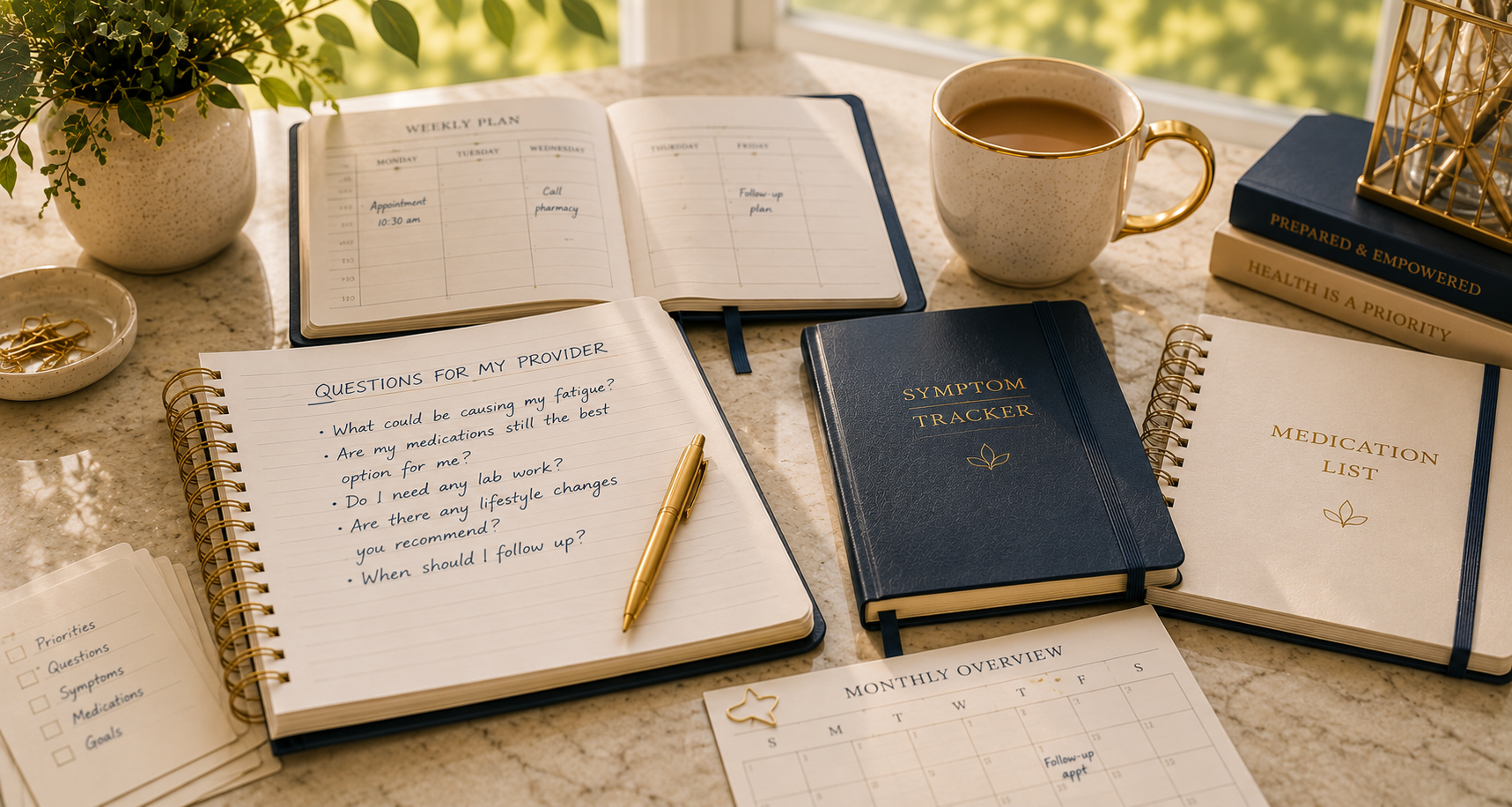
1. Write Down Your Questions
Don't rely on memory.
Keep a running list of questions as they come to mind and bring that list with you.
Questions that seem obvious at home are often forgotten during an appointment.
2. Make a List of Your Symptoms
Write down:
What you're experiencing
When it started
How often it happens
What makes it better or worse
These details can be incredibly helpful for your healthcare provider.
3. Bring an Updated Medication List
Include:
Prescription medications
Over-the-counter medications
Vitamins
Supplements
Many patients are surprised by how often medication information influences treatment decisions.
4. Identify Your Top Priorities
If you could only discuss one or two concerns during your appointment, what would they be?
Knowing your priorities helps ensure the most important topics are addressed first.
5. Take Notes During the Appointment
Healthcare visits can involve a lot of information.
Writing down recommendations, follow-up instructions, and next steps can help prevent confusion later.
If possible, consider bringing a trusted family member or friend to help listen and take notes.
A Simple Tool That Can Help
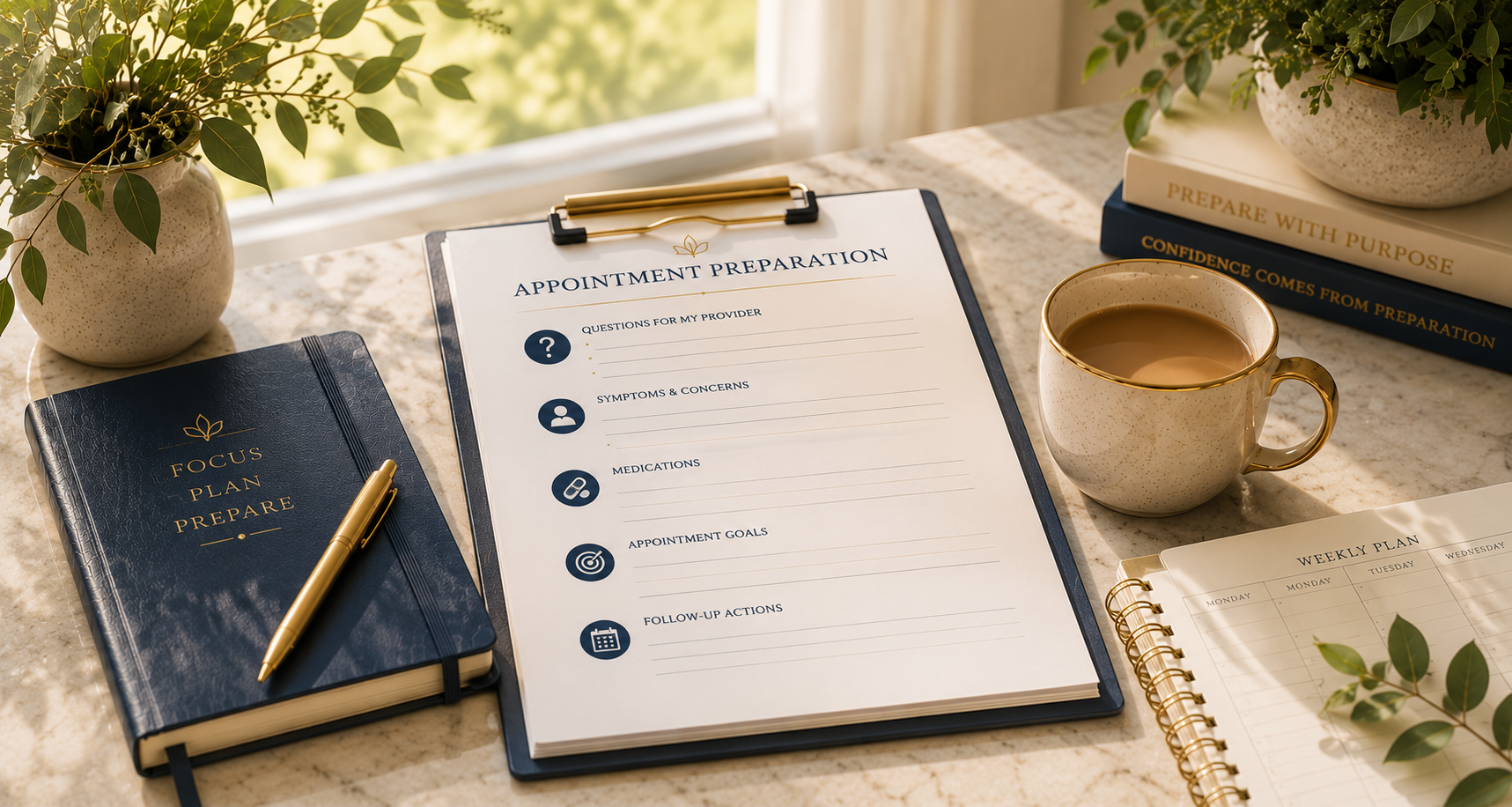
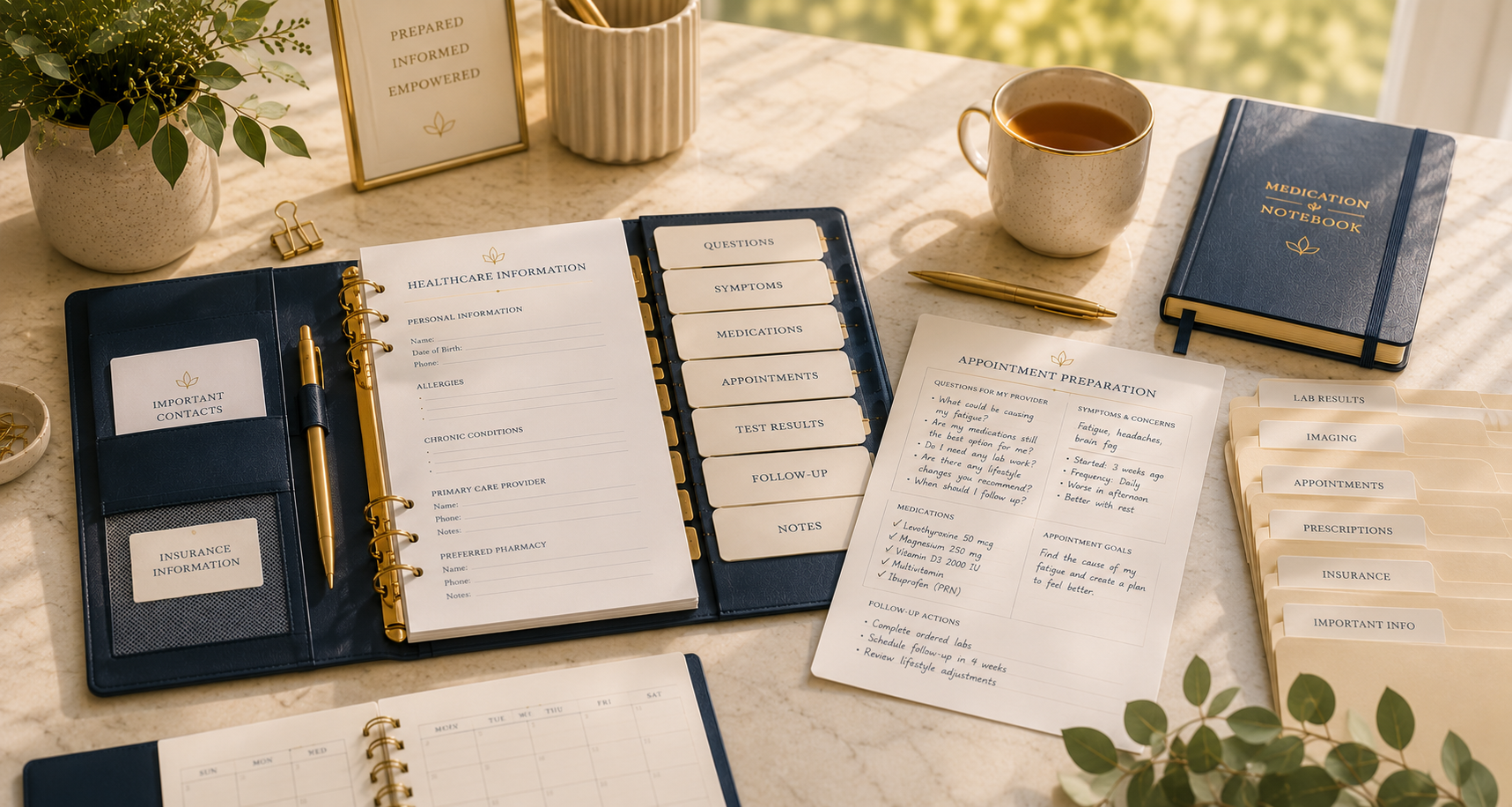
To help patients feel more organized and confident during healthcare visits, Apex Concierge Care offers a free Appointment Preparation Worksheet.
The worksheet helps you organize:
Questions for your provider
Symptoms and concerns
Medications
Appointment goals
Follow-up actions
Preparing for an appointment doesn't have to be complicated. A few minutes of planning beforehand can help you make the most of your time with your healthcare team and leave feeling more informed and confident.

Need Personalized Guidance?
This article provides general education.
If you'd like personalized support tailored to your situation, Apex Concierge Care offers one-on-one healthcare consulting and wellness planning.