Discharge Day Isn't the End of the Hospital Stay

For many patients and families, discharge day feels like a finish line.
The paperwork is signed, belongings are packed, and everyone is eager to get home.
But after years of working as a nurse, I've seen that the real challenges often begin after a patient leaves the hospital.
Suddenly, families are responsible for keeping track of medications, follow-up appointments, activity restrictions, warning signs, and recovery instructions. It's a lot of information to absorb, especially when you're tired, stressed, and focused on getting home.
Why Discharge Instructions Are So Easy to Forget
Most discharge education happens at the end of a hospital stay, often when patients and caregivers are exhausted and eager to leave.
Even when excellent education is provided, it can be difficult to remember everything that was discussed.
Patients commonly return home wondering:
When should I schedule my follow-up appointment?
Is this symptom normal?
When can I return to work?
Am I taking my medications correctly?
What should I be watching for?
These questions are incredibly common.
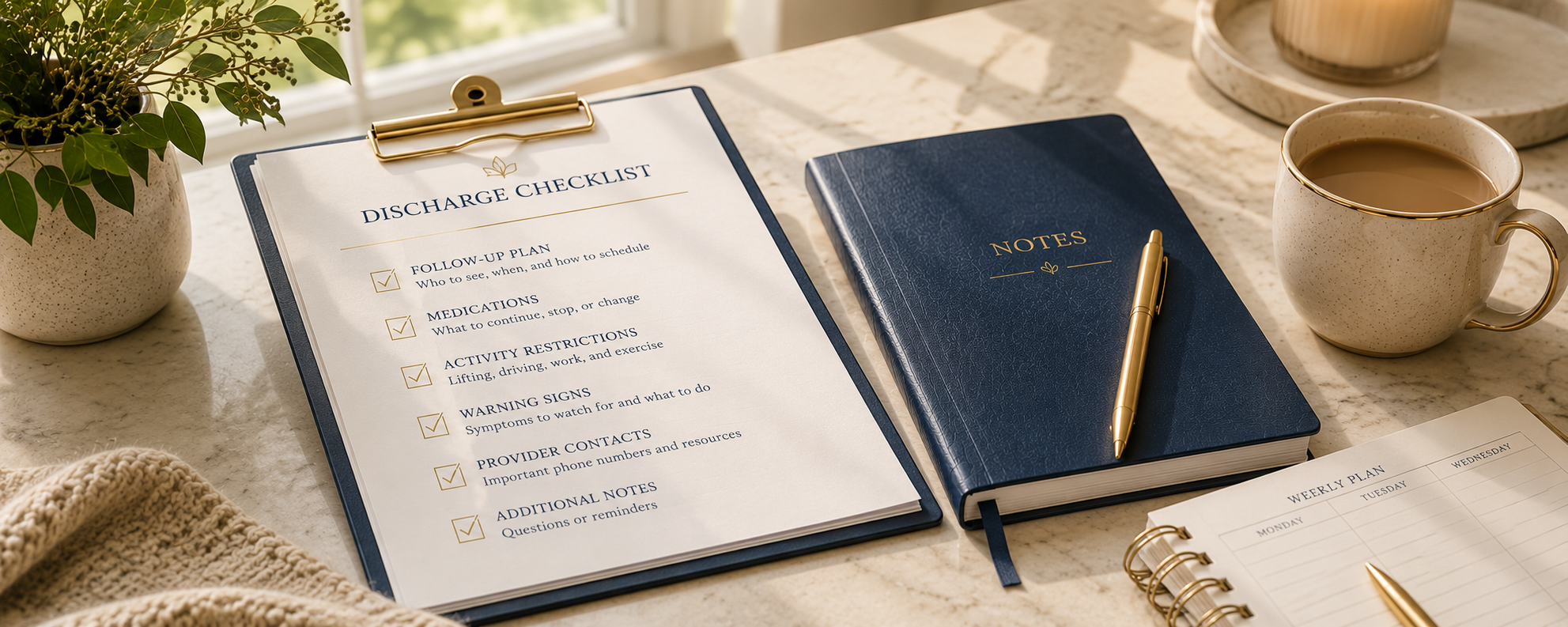
Before You Leave the Hospital
If possible, make sure you understand:
Your Follow-Up Plan
Who should you see?
When should you see them?
Do you need to schedule the appointment yourself?
Your Medications
What medications should you continue?
What medications should you stop?
Have any dosages changed?
Activity Restrictions
Are there lifting restrictions?
Driving restrictions?
Work restrictions?
Exercise limitations?
Warning Signs
What symptoms should prompt a call to your provider?
What symptoms require immediate medical attention?

Once You're Home
Take a few minutes to organize your discharge paperwork.
Keep:
Discharge instructions
Medication lists
Follow-up appointments
Provider contact information
all in one location.
Having everything together can reduce stress and make it easier to reference important information during recovery.

Recovery Is a Process
One of the biggest misconceptions about discharge day is that patients should immediately know how to manage everything on their own.
Recovery takes time.
Questions are normal.
Feeling overwhelmed is normal.
Every patient deserves to feel informed, organized, and confident in managing their health after returning home.
At Apex Concierge Care, helping patients and families understand and organize healthcare information is at the heart of what we do. Whether you're preparing for a procedure, returning home after a hospitalization, or supporting a loved one through recovery, a little preparation can go a long way.
Looking for additional support after a hospitalization?
Check out our Free Healthcare Resource Library
Need Personalized Guidance?
This article provides general education.
If you'd like personalized support tailored to your situation, Apex Concierge Care offers one-on-one healthcare consulting and wellness planning.